Table of Contents
Almost every article about the future of web development says the same three things: adoption will increase, security will improve, and AI will change everything. None of that can be wrong, which is exactly the problem. A prediction that cannot be wrong tells you nothing about what to learn on Monday.
So this version does it differently. Each trend gets what it actually is, in code, an honest account of where it really stands today, and a confidence rating you can argue with. At the end there is a method for judging any new trend yourself, which will outlast every specific prediction here.
What you get (14 minute read):
✓ Old predictions graded honestly, including the ones that did not happen
✓ Serverless and GraphQL explained in real code, not adjectives
✓ A trend explorer with a confidence rating for each
✓ What AI genuinely changed about this job, and what it did not
✓ Five questions that tell you whether a new trend deserves your weekend
First, Let’s Grade the Old Predictions
Before making new forecasts, it is only fair to check how the confident ones from a few years ago turned out. This is the part most trend articles skip.
| The prediction, five years ago | What actually happened | Verdict |
|---|---|---|
| “Serverless will replace traditional servers” | Widely used for specific jobs, but most applications still run on ordinary servers and containers. It became a tool, not a replacement. | PARTLY |
| “GraphQL will replace REST” | It found a real home in large applications and headless CMSs. REST remained the default for most of the web, and some well-known teams moved back to it. | NO |
| “Everything will be a single-page app” | The opposite happened. Server rendering returned as the default in the major frameworks. | NO |
| “AI will write most of the code” | AI now writes a great deal of code, with a human deciding what to build and checking the result. Faster, not autonomous. | PARTLY |
| “JavaScript bundles will keep growing” | The industry turned around and started competing on sending less JavaScript. | NO |
| “WebAssembly will go mainstream” | Real and genuinely used for heavy work such as design tools and video editing in the browser. Not something most web developers touch. | PARTLY |
| “PHP and WordPress are finished” | Said every year for a decade. Both still run an enormous share of the web and a large freelance market. | NO |
The pattern in that table is the most useful thing in this article. New technologies rarely replace old ones. They add a layer and take a slice of the work they are genuinely better at, while the old thing carries on. Predictions that say “X will kill Y” are almost always wrong. Predictions that say “X will take over this specific job” are often right.
The Trends, With Confidence Ratings
Click a trend. Each one gets a plain description, where it actually stands, and how confident I am that it matters for your next five years of work.
Serverless, in Actual Code
“Serverless” is a bad name: there are still servers, you just never see them. You upload a function; the platform runs it when a request arrives and charges you for the milliseconds it ran. When nobody visits, you pay nothing.
// That is the whole deployment. No server to set up,
// no nginx, no process manager, no SSH.

export default async function handler(req, res) {
  if (req.method !== 'POST') {
    return res.status(405).json({ error: 'Method not allowed' });
  }

  const { name, email, message } = req.body;
  if (!name || !email || !message) {
    return res.status(400).json({ error: 'All fields are required' });
  }

  await sendEmail({
    to: process.env.CONTACT_INBOX,   // secrets from the platform
    subject: `New message from ${name}`,
    text: message
  });

  return res.status(200).json({ ok: true });
}
$ vercel deploy
✓ Deployed to https://my-site.vercel.app
  Functions: api/contact.js
  Region:    all
  Cost:      $0.00 while nobody is using it
Example output. The same function shape works on Vercel, Netlify, Cloudflare Workers and AWS Lambda with small differences.
When serverless is right, and when it is a trap
| Good fit | Bad fit |
|---|---|
| Contact forms, webhooks, scheduled jobs | A long-running process, such as a WebSocket chat server |
| Traffic that is spiky or unpredictable | Steady, heavy traffic, where a fixed server is usually cheaper |
| Side projects where idle cost should be zero | Anything that needs more than a few seconds per request |
| Image resizing, payment webhooks, email sending | Work that opens many database connections at once |
The cold start, explained honestly. If nobody has called your function recently, the platform has to start it from scratch, which adds anywhere from tens of milliseconds to a couple of seconds on that first request. For a contact form, nobody notices. For the main page of a shop, they do. This has improved a lot and has not disappeared.
GraphQL, in Actual Code
The original article described GraphQL as “flexible and efficient” without showing a single query. Here is the actual difference, and once you see it the appeal is obvious.
The problem: you want a user’s name and the titles of their last three posts. With REST that is usually two or three requests, and each returns far more data than you asked for.
# 1
GET /api/users/42
# returns 28 fields.
# you wanted one.

# 2
GET /api/users/42/posts
# returns full post bodies
# you only wanted titles.

# 3
GET /api/posts/7/comments
# ...and now a third trip.

# 3 round trips
# ~180 KB transferred
query {
  user(id: 42) {
    name
    posts(last: 3) {
      title
      comments { count }
    }
  }
}

# You asked for 4 fields.
# You get exactly 4 fields.

# 1 round trip
# ~2 KB transferred
{
  "data": {
    "user": {
      "name": "Hina",
      "posts": [
        { "title": "Learning Docker", "comments": { "count": 4 } },
        { "title": "CSS Grid Tips",  "comments": { "count": 11 } }
      ]
    }
  }
}
So why did it not take over? Because that elegance has a bill attached: caching is much harder than with REST, a single careless query can hammer your database, you need extra tooling, and every developer on the team has to learn it. For a small or medium project, REST plus a couple of well-designed endpoints usually wins on effort. GraphQL earns its complexity when many different clients need many different shapes of the same data.
| REST | GraphQL | |
|---|---|---|
| Learning curve | Low. Everyone already knows it. | Moderate, on both sides. |
| Caching | Free, built into HTTP and every CDN. | Your problem to solve. |
| Over-fetching | Common. | Solved by design. |
| Many different clients | Endpoints multiply. | Where it genuinely shines. |
| Best for | Most websites and apps. | Large apps, headless CMSs, many client types. |
AI: What Actually Changed
The original article listed nine ways AI would affect web development. Most were true but unfalsifiable. Here is the version written by someone who uses these tools daily.
The honest risk for beginners. If AI writes the code while you are still learning, you can produce working projects without building the understanding underneath. Then the first time something breaks in an unusual way, there is nothing to fall back on. Use it to explain things to you as much as to write things for you.
How to Judge Any Future Trend Yourself
Specific predictions age badly. A method does not. When the next thing arrives and everyone insists you must learn it immediately, ask these five questions.
My Actual Five-Year Bets
With all the caveats above, here is what I would put money on, stated clearly enough to be wrong.
| Prediction | Confidence | Why |
|---|---|---|
| HTML, CSS, HTTP and SQL will still be the foundation | VERY HIGH | They have survived every previous era. Nothing on the horizon replaces them. |
| AI assistance becomes a normal part of every editor | VERY HIGH | Already most of the way there. It will stop being remarkable, like autocomplete. |
| Server rendering stays the default for content sites | HIGH | Speed and search visibility are permanent incentives, not fashions. |
| Serverless keeps growing for specific jobs, not as a default | MEDIUM | Economics favour it for spiky work and not for steady heavy load. |
| GraphQL stays a strong niche rather than the standard | MEDIUM | REST’s simplicity and free caching keep winning the default position. |
| More work moves back to the server and the edge | MEDIUM | The pendulum is mid-swing. Phones stay slower than servers. |
| Some framework you have not heard of is popular in 2031 | VERY HIGH | This has been true in every five-year window since 1995. |
What this means for what you learn next. Spend eighty percent of your effort on the things in the first row, which have never once let anyone down, and twenty percent sampling whatever is in the middle of the hype cycle. That ratio has worked in every era described in the history of web development, and it will probably work in the next one.
Common Questions
Should I learn serverless or traditional servers first?
Traditional first. Understanding what a server, a process and a port actually are makes serverless feel like a convenience. Learning it the other way round leaves you helpless the first time something behaves oddly, because the abstraction hides the thing you never learned.
Is it worth learning GraphQL in 2026?
Worth understanding, not worth specialising in unless a job asks for it. Spend an afternoon writing a few queries so you recognise it, then go back to building solid REST APIs, which is what most work needs.
Will AI take web development jobs?
It is changing what the job is more than removing it. The routine, repetitive end of the work is being compressed, while judgement, architecture and debugging are becoming the valuable part. The developers most at risk are the ones whose only skill was typing out code someone else specified.
What is edge computing, in one sentence?
Running your code in a data centre physically near the visitor instead of one central location, so the response travels a shorter distance. It matters most for a global audience and barely at all if your users are all in one country.
How do I keep up without burning out?
Stop trying to. Follow two or three reliable sources, skim headlines, and only go deep when something solves a problem you actually have. Depth in what you use beats shallow familiarity with everything, and nobody has ever been hired for having heard of a framework.
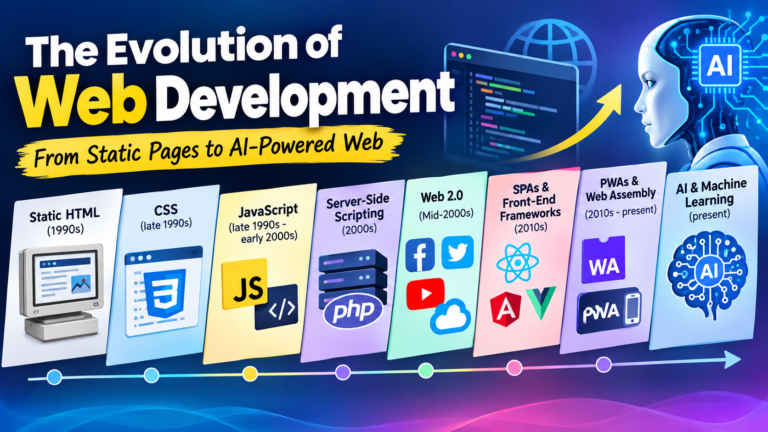
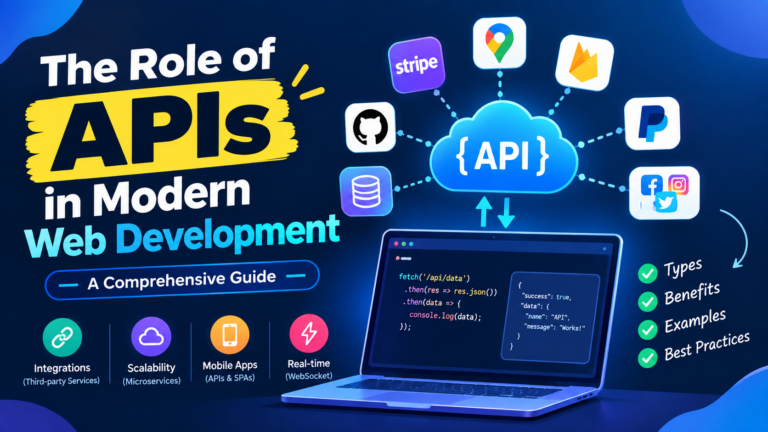
Read next: Understanding the Evolution of Web Development shows the pattern these predictions sit inside, and The Role of APIs covers the REST foundation GraphQL builds on.
Final Thoughts
The future of web development is not a list of technologies. It is a repeating pattern: a new tool appears, solves one real problem well, gets oversold as the replacement for everything, then settles into the slice of work it genuinely improves. Serverless, GraphQL and AI are all somewhere on that curve right now.
So learn the layer that does not move, sample the rest without anxiety, and judge each new thing with the five questions above. Which prediction in this article do you think I got wrong? Tell me in the comments, and come back in five years to check. I read every one.
If this was useful, share it with someone drowning in “the next big thing”.