
Table of Contents
Tesla’s New Roadster Just Drove Upside Down and Flew Over Five Cars. Here’s How.
Tesla and SpaceX unveiled the long-awaited second-generation Roadster at a SpaceX test site in McGregor, Texas. We break down the specs, the suction system, the thrusters, and what it all means for the future.

1. What Happened in Texas
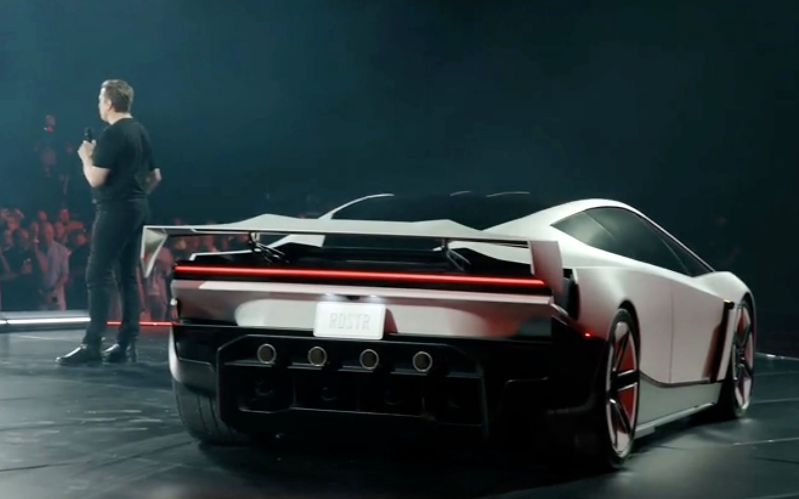
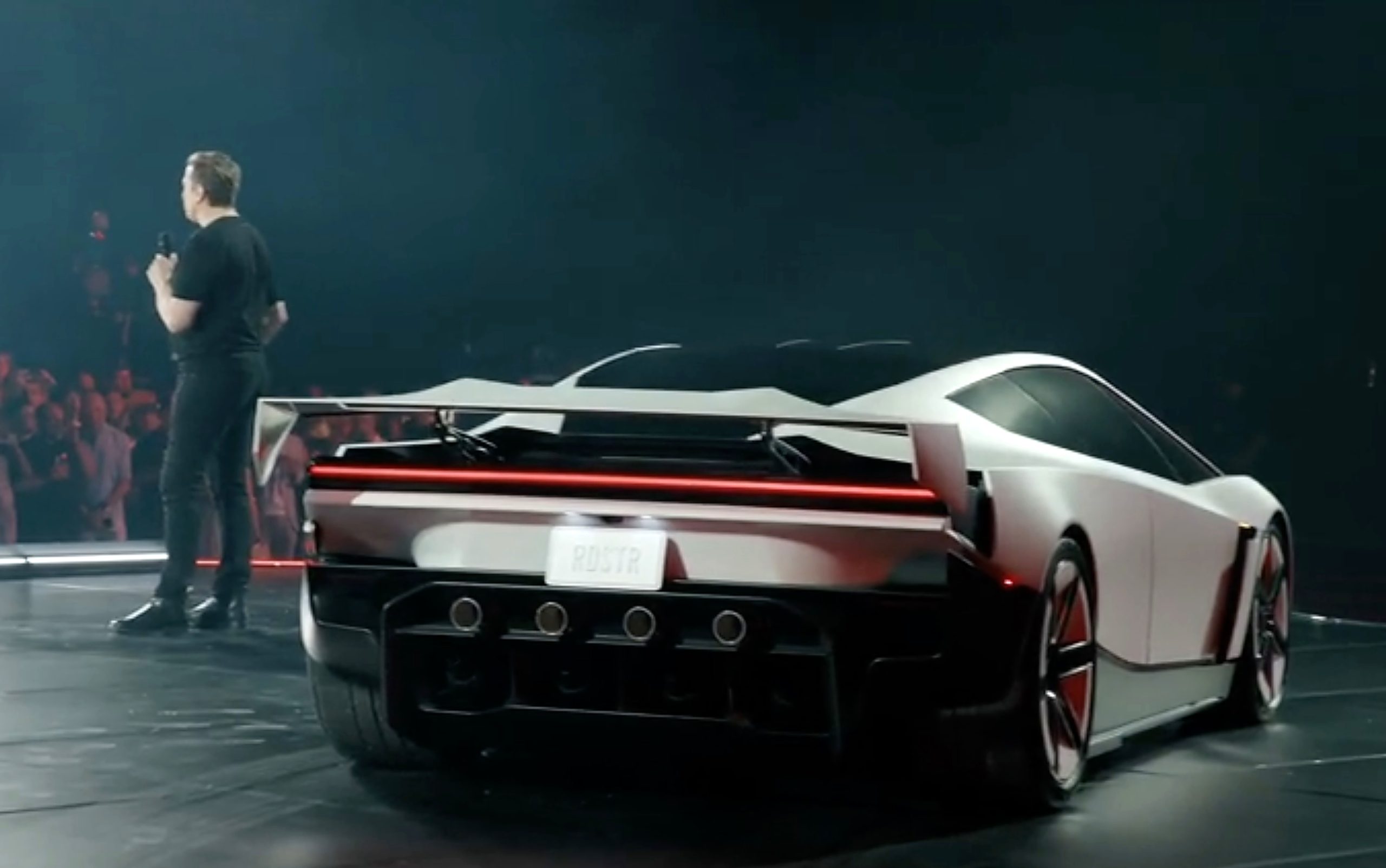
On the evening of October 15, 2026, Tesla livestreamed the reveal of its redesigned Roadster from a SpaceX test facility in McGregor, near Waco. It was not a normal car launch. The Roadster accelerated up a huge curved ramp, stayed stuck to it until it was completely upside down, then used thrusters to leave the ramp, flip in mid-air and land back on its wheels.
It then used the thrusters to hop over a lineup that included the Cybercab, Cybertruck, Tesla Semi, Model Y and Model 3. Elon Musk’s reaction after it worked: “Flying cars are real.” Tesla also showed a 0 to 60 mph run in about a second, and Tesla called it “the best of the last human-driven cars.”
2. Specs and the Three Versions
Tesla now sells the Roadster in three flavors, each one more extreme than the last:
| Version | Seats | 0-60 mph (claimed) | Who it’s for |
|---|---|---|---|
| Performance | 2 | Under 1.6 s | Road ready, by reservation |
| Thrust | 2 | Under 0.9 s | Race ready, rear cold gas thrusters |
| Rocket | 1 | Under 0.59 s | “Air ready”, thrusters around the car, invite only |
Beyond the numbers, Tesla says it saved weight with magnesium, titanium and carbon fiber. The look is minimal: hidden headlights, a full-length taillight, an aerospace-inspired white paint called Ano White, and gold-tinted glass modeled on spacesuit visors. Steering is steer-by-wire with a yoke.
3. The “Vacuum” (Suction) System Explained
This is the trick that let the Roadster stay glued to a ramp while upside down. People call it a vacuum system, but it is more accurate to call it a fan-based suction and ground-sealing system. It does not pull air out of a sealed chamber like a vacuum cleaner. Instead, fans pull air out from under the car so the higher pressure above pushes the car down onto the surface.
Simplified illustration of how fan suction creates downforce.
How it works, step by step
- Seal the gap. Flexible skirts and ground sealing close off the space between the car’s floor and the road.
- Pull the air out. Powerful electric fans draw air from that space, lowering the pressure underneath.
- Pressure does the rest. Normal air pressure above the car pushes it down, adding grip far beyond what weight alone gives. Tesla says it is strong enough to hold the car upside down even when stationary.
- Multi-mode control. The fans can change speed, so the car can add grip in slow corners or hard braking, then back off for top speed.
The idea behind it
Electric cars have a problem that normal wings cannot fix. At launch, in slow corners and under braking, a car is moving too slowly for wings to make real downforce. Fans create grip even at zero speed. Tesla was granted a patent in late September 2026 called “Electric Car Fan,” describing a ducted fan package in the rear with four axial fans powered by the high-voltage battery. Fan cars are not new: the Brabham BT46B was banned from Formula 1 in the 1970s for using a similar trick because it was so effective.
4. The SpaceX Cold Gas Thrusters
Musk promised a “SpaceX Package” back in 2018, and the demo showed what he meant. These are cold gas thrusters: no fire, no fuel. Highly pressurized air is stored in tanks and released through nozzles to push the car, the same category of hardware rockets use for steering and attitude control.
- Storage: Tesla’s engineering lead Lars Moravy said about 600 liters of compressed air feed 10 thrusters. Tesla says every usable empty space in the car is packed with carbon-fiber overwrapped pressure vessels (COPVs).
- Control: all-electric actuators make tiny adjustments to keep the car stable in flight.
- Claim: Tesla says the thruster system produces 4 to 5 times the force that tires can, which is why acceleration jumps so dramatically.
One honest note: COPVs are the same kind of tank involved in past SpaceX rocket failures, so engineering and safety will be watched closely.
5. Reality Check: What’s Still Unknown
- Not road legal yet. Tesla notes the car is not approved for public road use, and Rocket is not available in all regions.
- Final price. Reservations are open, with $50,000 deposits reported, but a full price list has not been confirmed.
- Delivery date. Production is planned at Giga Texas in 2027 or 2028. Tesla has missed every earlier Roadster date, so patience is wise.
- It’s a halo car. Musk himself has said it may not move revenue much and that anyone whose top priority is safety should not buy it.
6. The Future of the Roadster
The Roadster is less about selling thousands of cars and more about showing what Tesla and SpaceX can build together. Expect to hear more about shared engineering between the two companies, and watch for Tesla’s Q3 earnings on October 21 for any extra details. If the suction and thruster tech proves reliable, pieces of it could eventually inspire safer, grippier future performance cars. If not, it will still go down as the most dramatic car reveal ever staged.
Final Thoughts
After almost a decade of waiting, the Roadster arrived with a spectacle that nobody expected: a car that sticks to a ceiling and flies over traffic. The real test starts now, with road approval, pricing and actual deliveries. Until then, it is the most exciting piece of EV news of the year.
7. Latest News and Official Links
Official
Latest coverage
- TechCrunch: Tesla reveals SpaceX-powered Roadster
- CNBC: What to know about the delayed EV
- CBS News: “Flying cars are real”
- Fox Business: Flying debut, 60 mph in under a second
- Teslarati: Three configs, full specs
- Teslarati: How the fan system and thrusters work
- Austin American-Statesman: Live from McGregor
8. FAQ
Can the Tesla Roadster really fly?
In the demo it launched off a ramp with cold gas thrusters, flipped in mid-air and hopped over a row of vehicles. It is a powered leap, not sustained flight like an aircraft.
Is the vacuum system a real vacuum?
Not exactly. It is a fan and ground-sealing system that lowers air pressure under the car, creating strong suction downforce.
Is it street legal?
Tesla says it is not approved for public road use at this time.
When can I buy one?
Reservations are open now. Production is planned for Giga Texas in 2027 or 2028.
Last updated October 17, 2026. Specs are Tesla’s claimed figures from the unveiling and may change before production.